Book Reviews: December 2025, Part 2
In which the author starts out reviewing books only to wind up unpacking the impending destruction of her grandparents' graves.
As previously threatened, herein lies shoddy reviews of the rest of the books I read in December of last year.
Remarkably enough, I read 66 books in total in 2025, surpassing my goal of 50, which itself was half the over-ambitious goal of 100 books I'd set in 2024. I'm slowly learning that it's okay to set lower bars for myself and others, celebrate accomplishments, and curtail disappointment by expecting less.
Fingers crossed for getting to play 2026 on easy mode.
Banish Your Inner Critic: Silence the Voice of Self-Doubt to Unleash Your Creativity and Do Your Best Work by Denise R. Jacobs
It's possible that the author is my new hero. She taught herself web design, runs in UX circles, decided to become something and then DID IT, and makes jewelry. Neat!
Like many self-help books I've read to the point of saturation, this one speaks to being kind to yourself, replacing shame with grace, et cetera. However, the writing is engaging, a few activities might be useful, and you really do come away feeling like Jacobs is on your side. Which is nice.
One pitfall of my own design, in listening to audiobooks that contain activities, is that I'm never ready to do the activities at the time they're presented. I cannot write lists or perform spells while also washing dishes or cooking food. This isn't reflected in my scoring, but is rather just a personal gripe. Is that my self critic talking? Maybe.
4 out of 5 stars.
Entering Hekate's Cave: The Journey Through Darkness to Wholeness by Cyndi Brannen
Might Hekate be the perfect goddess for an eclectic pagan's pantheon? After reading this book, I'm inclined to say yes. From processing grief to transcending trauma to bringing light to low-key ruling the Underworld to perfectly embodying the dang Moon, it sure seems like she might offer everything a female-presenting ageing millennial needs at this point of life. How wonderful to have fully found her with Brannen's help.
The book even points out that the maiden-mother-crone archetypes are something of a more modern invention of patriarchal origins. WE'RE DOING IT WRONG, FRIENDOS.
The author also gets bonus points for folding in additional mythology, sharing with the reader previously unknown stories of Scota, originator of Gaels, and Heqet, a frog-headed fertility goddess of Ancient Egypt. I'm in love.
My one complaint is the author's repeated notes of encouragement on the use of crystals. Although I once treated them as metaphysical tools and still display my collection around my home, I recognize now that any item can be attributed with whatever properties you'd like, and that many modern mining practices are antithetical to our planet's health and the dignity and agency of the humans doing the physical labor.
4.75 out of 5 stars.
The Faithful Gardener: A Wise Tale about That Which Can Never Die by Clarissa Pinkola Estés
I read two Estés books in December, and needed this one at precisely the time of my consumption.
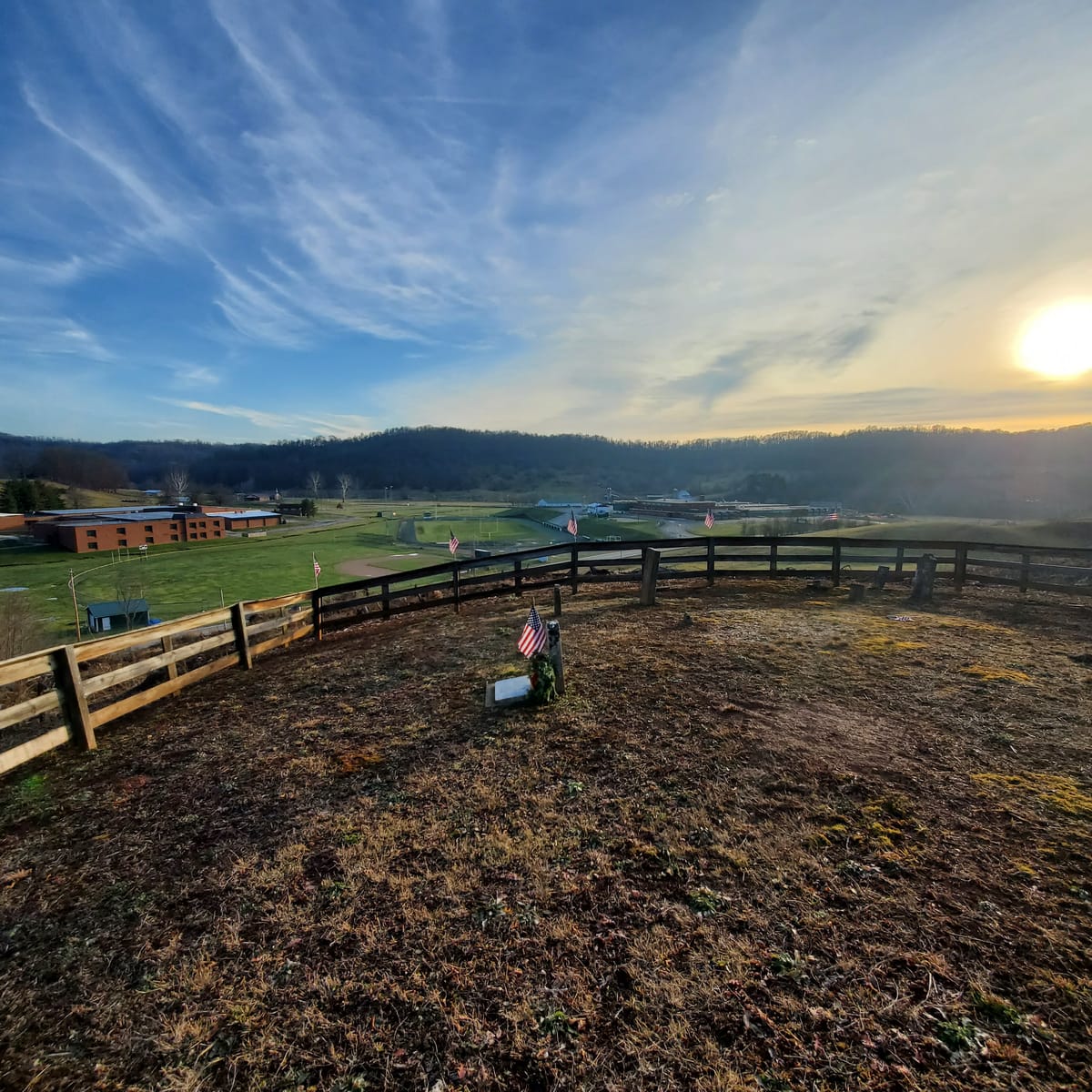
I'd spent Christmas at my brother's house, which my father built in the 1980s. Before that, he had lived from high school onward at the 1860s farmhouse the next lot over, which was also where I'd spent my childhood and early adolescence. There was a beautiful white house, a barn that held memories of animals I loved, a mulberry tree with a crack in it where mother cats would nurture their kittens, a concrete pad where I'd ride my bike in endless circles, my grandfather's workshop, a wood shed that was home to more cats and kittens, a small field topped by a burn pile that saw several bonfires, a concord grape arbor, a tree with a rope swing, a pond full of fish, a big hill for sledding, a bog that hosted spring peepers, hills I'd rove with my childhood best friend, a small side garden of trees and bushes that the Japanese beetles liked, an apple tree and stock tank, and, some distance from the main stead, graves containing the cremated remains of my paternal grandparents.
All of that is gone now.
The house sold when we moved to California, then sold again to the school district, which came into more oil and gas money than they know what to do with. First they leveled the buildings to park their school buses, because apparently one giant parking lot is not enough. Now they've stripped the fields and surrounding forests, dozed the property to flat mud pits, and plan to install massive sports complexes and more offices for their tiny enrollment in a rural and not particularly desirable southeastern Ohio county.
The school district wasn't even aware that there was a graveyard in the parcel and are now trying to figure out a way to move bodies and cremains.
So, visiting my brother on Christmas kind of ripped my heart out.
It feels helpless and hopeless and I wish every possible inconvenience and little unhappiness on the individuals and governing bodies making these senseless and catastrophic decisions. They could use the money they're spending to fund the college or vocational educations of every student in the district, but instead choose to destroy a beautiful landscape and community members' pasts.
Back to the book, which I read after the holiday, unaware of its contents.
The author tells the story of an uncle traumatized by European war and fiercely defensive of his family's American farmland as a result, overcome by grief when it was overtaken by developers but ultimately persisting to old age as a beloved elder in spite of everything.
Ugh.
The second story tells of the life of a tree, from growth to felling to becoming wood, ultimately persisting with purpose through different phases of its existence, even as the situation became more grim.
Ugh.
It's at least nice to know that the land will outlast everyone currently destroying it, and, ultimately, the human species.
4.5 out of 5 stars.
Royal Witches: Witchcraft and Nobility in Fifteenth-Century England by Gemma Hollman
A hearty boo to whoever decided on the title of this volume. Based on how long the wait time was for this book in the Libby app, I suspect, like myself, many others assume that it's about historical figures that actively practiced witchcraft. Not so.
Rather, it's a fairly dry historical account of late medieval English history that focuses on a few female figures that were accused of witchcraft for the political gain of others. And that's about it.
I learned about some folks I hadn't previously known about and it re-sparked a dormant interest in English history, but the sensationalist mis-titling really is unforgivable. The author also heartily over-relies on the use of "however."
Boo.
3.5 out of 5 stars.
I've set a goal for 60 books in 2026. I've got some pretty long ones in the queue, so we'll see how it goes!
In the meantime, try not to destroy childhood homes and desecrate people's grandparents' graves.